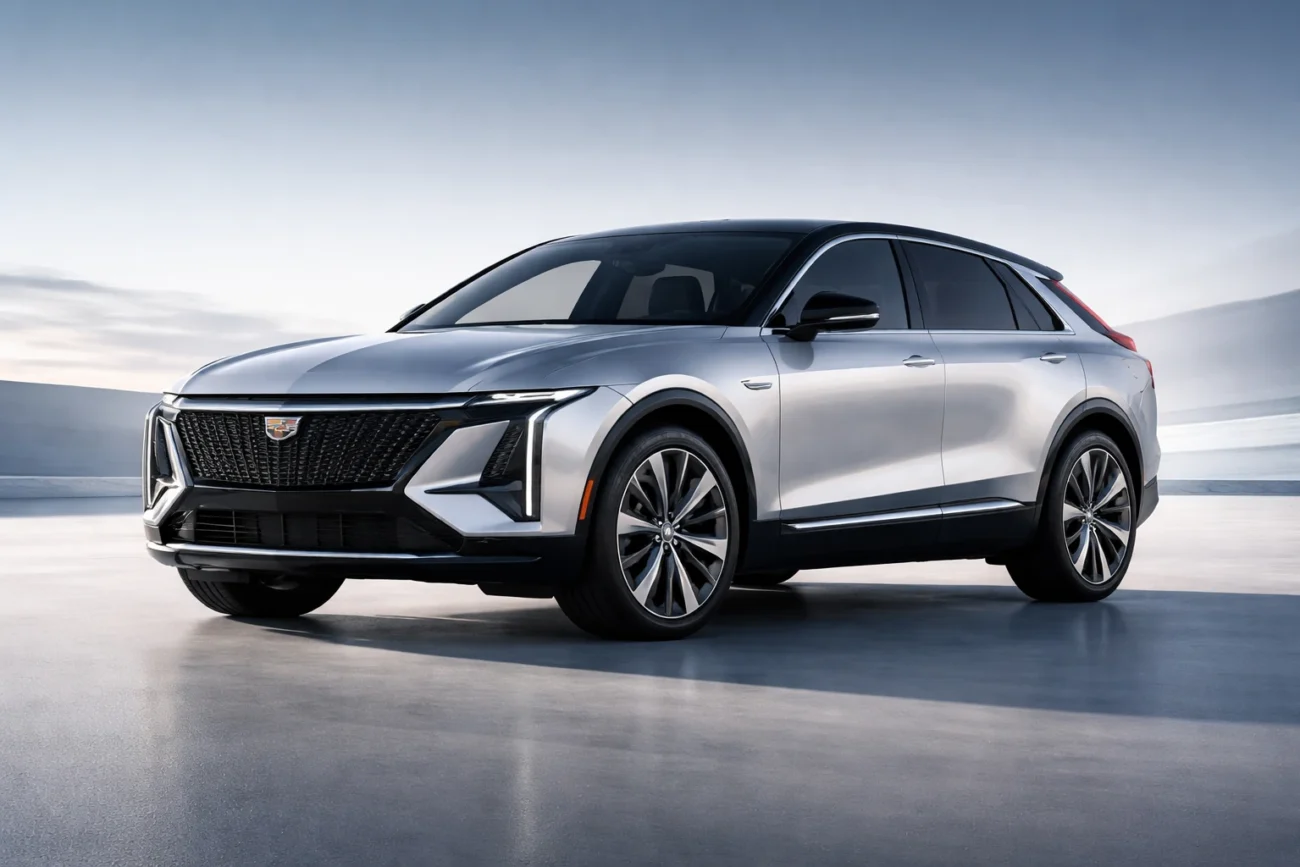
Cadillac’s LYRIQ is built to feel modern in every sense, from its curved display to its quiet, torque-heavy electric drivetrain. But for many owners and shoppers, the real question isn’t about screens or sound systems. It’s simpler, and more practical: do the driving modes in Cadillac LYRIQ actually change how far the car can go, or how much battery it uses?
You won’t find a clean yes-or-no answer in the brochure. Cadillac doesn’t publish separate range figures for Tour, Sport, or Snow/Ice modes. The official EPA range is tied to the vehicle itself—its battery, drivetrain, and configuration—not to how you set the drive mode dial.
But that’s only half the story. Because while the official number stays the same, the way the LYRIQ uses energy in the real world absolutely can change depending on the mode you choose and how you drive within it.
So let’s break it down carefully, without guesswork.
The Official Answer: No Separate Range Ratings by Driving Mode
Start with what Cadillac actually states. The LYRIQ’s range is listed as up to 326 miles for the rear-wheel-drive version and around 319 miles for the all-wheel-drive version, depending on model year and configuration. Those figures come from standardized EPA testing, which doesn’t factor in switching between drive modes during everyday driving.
That means there is no official chart that says, for example, “Sport mode reduces range by X percent” or “Tour mode adds X miles.” Automakers don’t certify range that way. The rating reflects a controlled test cycle, not how someone toggles between modes on a commute.
So if you’re expecting a setting that instantly gives you more rated miles on the dash, that doesn’t exist here.
But here’s the thing. The absence of separate ratings doesn’t mean the modes are neutral. They shape how the car behaves, and that behavior affects energy consumption.
What Each Cadillac LYRIQ Driving Mode Actually Changes
To understand how range might shift, you need to look at what the modes do under the surface.
Tour Mode: The Default Baseline
Tour mode is the LYRIQ’s everyday setting. It balances acceleration, steering effort, and ride comfort in a way that feels predictable and smooth. Throttle response is measured rather than aggressive, and the car doesn’t push power as quickly as it can.
In practice, this tends to be the closest thing to an “efficiency-friendly” mode, even if Cadillac doesn’t label it that way. Drivers who stay in Tour mode often see range numbers that align more closely with the official estimate, especially in mixed driving conditions.
Sport Mode: Sharper Response, Higher Energy Use
Switch to Sport, and the LYRIQ changes its personality. The steering tightens, and the throttle becomes more sensitive. Press the accelerator, and the car responds more quickly and more forcefully.
That added responsiveness doesn’t come free. Faster acceleration means higher power draw from the battery, especially during stop-and-go driving or when merging aggressively. Over time, that behavior can lead to higher energy consumption per mile.
The numbers tell a different story here. Even if the EPA range remains unchanged, real-world driving in Sport mode—especially with a heavy foot—will usually reduce how far you can go on a charge.
Snow/Ice Mode: Stability Over Efficiency
Snow/Ice mode is designed for low-traction conditions. It softens throttle response and limits torque delivery to prevent wheel slip. The car becomes more cautious, easing into acceleration rather than jumping forward.
At first glance, that might sound efficient. Slower acceleration should mean less energy use, right?
There’s a catch, though. Snow and ice conditions themselves are far less efficient. Cold temperatures reduce battery performance, and rolling resistance increases. So while the mode itself doesn’t inherently waste energy, the environment it’s meant for often leads to shorter range.
My Mode: Custom Feel, Not a Magic Efficiency Setting
My Mode allows drivers to tweak steering feel, acceleration response, and even sound characteristics. It’s tempting to think this could be tuned into a hidden “eco mode,” but that’s not really how it works.
You can soften acceleration and make the car feel calmer, which may help reduce energy use if it changes how you drive. But My Mode doesn’t unlock new battery capacity or fundamentally change the vehicle’s efficiency profile. It’s a personalization tool, not a range extender.
Why the EPA Range Doesn’t Change — But Your Real Range Does
The disconnect between official range and real-world experience comes down to how energy is used.
The LYRIQ’s battery stores a fixed amount of energy. Driving modes don’t increase or decrease that capacity. What they do change is how quickly that energy is consumed.
Aggressive acceleration, higher speeds, and rapid changes in power demand all pull more energy from the battery. Gentler driving stretches that energy further. Driving modes influence those patterns by shaping how the car responds to your inputs.
So what does this actually mean? Think of it like two drivers in identical cars. One stays in Tour mode and accelerates smoothly. The other uses Sport mode and pushes the car harder at every opportunity. Both have the same battery. But one will likely travel farther before needing a charge.
The Bigger Factor: Regenerative Braking
If you’re trying to maximize range in a LYRIQ, the driving mode might not be the most important setting. Regenerative braking often matters more.
The LYRIQ supports One-Pedal Driving and Regen On Demand, both of which allow the car to recover energy during deceleration and send it back to the battery. Instead of wasting kinetic energy as heat through traditional braking, the system captures some of it.
Used well, regen can extend range in city driving where stopping and slowing are frequent. It doesn’t create energy out of thin air, but it reduces losses.
There’s a limitation, though. Regenerative braking is less effective when the battery is nearly full or when temperatures are very cold or very hot. In those conditions, the system can’t accept as much recovered energy, and the benefit drops.
So while drive modes shape how energy is spent, regen determines how much of it you get back.
Real-World Driving: Where Modes Start to Matter
On paper, drive modes don’t change range. On the road, they absolutely can.
Imagine a typical weekday commute. In Tour mode, the LYRIQ pulls away smoothly, coasts more naturally, and encourages a steady pace. Energy use stays relatively consistent.
Switch to Sport mode, and the same route feels different. You accelerate harder from traffic lights, close gaps faster, and maybe carry more speed into turns. Over the course of 20 or 30 miles, those small changes add up.
The effect becomes even more noticeable in city driving, where acceleration events are frequent. On the highway, the difference between modes shrinks, because steady cruising dominates energy use.
Weather also plays a role. In winter, Snow/Ice mode might keep the car stable, but cold temperatures can reduce range regardless of mode. In summer, heavy air conditioning use can do the same.
Does One Mode Actually Give the Best Range?
There’s no official “eco mode” in the LYRIQ lineup, at least not labeled as such. But if the goal is to go as far as possible on a charge, Tour mode combined with smooth driving habits usually delivers the best results.
That said, the mode alone won’t save you if your driving style works against it. A driver in Sport mode who accelerates gently may use less energy than someone in Tour mode who drives aggressively.
Not everyone agrees on how much difference modes make. Some owners report only small variations, especially on longer highway drives. Others see noticeable drops in range when using Sport mode in city conditions.
The variation comes down to behavior. The car responds to how it’s driven more than what mode it’s in.
What Matters More Than Driving Modes
It’s easy to focus on the mode selector because it’s visible and easy to change. But several other factors have a bigger impact on battery usage.
Speed is one of the biggest. Driving at 75 mph consumes far more energy than cruising at 60 mph, regardless of mode. Temperature is another. Cold weather reduces battery efficiency and increases energy demand for cabin heating.
Then there’s terrain. Climbing hills requires more energy, while descending allows regen to recover some of it. Tire choice, load in the vehicle, and even wind conditions can all influence range.
That said, driving modes still matter because they shape how you interact with all those variables. They don’t operate in isolation.
What Cadillac Isn’t Saying — And Why That Matters
Automakers tend to avoid publishing mode-specific efficiency data for a reason. The variability is too high. A fixed number would mislead as often as it informs.
Cadillac’s approach reflects that reality. Instead of promising a certain number of miles per mode, it explains how each setting changes the driving experience. The assumption is that drivers will adapt their behavior accordingly.
But for buyers comparing EVs, that can feel like a gap. People want clear answers about range, and driving modes seem like an obvious lever.
Here’s where a little skepticism helps. If a manufacturer did publish exact range differences by mode, those numbers would still depend heavily on driving style. The label wouldn’t tell the full story.
Frequently Asked Questions
Do Cadillac LYRIQ driving modes change the official EPA range?
No. The EPA range for the LYRIQ is based on standardized testing and does not vary by drive mode. Switching between Tour, Sport, Snow/Ice, or My Mode won’t change the official range figure listed for the vehicle.
Does Sport mode use more battery in real driving?
It often does. Sport mode sharpens throttle response and encourages quicker acceleration, which increases energy consumption if you drive more aggressively. The effect depends heavily on how you use the accelerator.
Which mode is best for getting the most range in a LYRIQ?
Tour mode is generally the most range-friendly because it balances performance and efficiency. Pairing it with smooth driving and effective use of regenerative braking tends to deliver the best results.
Does Snow/Ice mode reduce range?
The mode itself doesn’t inherently reduce efficiency, but the conditions it’s designed for—cold temperatures and slippery roads—usually lead to lower range overall. The environment matters more than the mode.
Can My Mode be set up for better efficiency?
You can adjust My Mode to soften acceleration and make the car feel calmer, which may help reduce energy use if it changes your driving behavior. But it doesn’t unlock additional battery capacity or a special efficiency setting.
Do One-Pedal Driving and regenerative braking increase range?
They can help extend range, especially in stop-and-go traffic, by recovering some energy during deceleration. Their effectiveness depends on battery state of charge and temperature.
Conclusion
So, do the driving modes in Cadillac LYRIQ offer different ranges or battery usages? The clean answer is no—at least not in any official, measurable way that Cadillac or the EPA will publish.
But that answer only gets you halfway there. In real-world driving, the mode you choose influences how the car behaves, and that behavior affects how quickly the battery is used. Sport mode can lead to higher consumption if it encourages aggressive driving. Tour mode tends to keep things more balanced. Snow/Ice mode trades efficiency for control when conditions demand it.
The bigger picture is this: range in an EV isn’t just about the machine—it’s about the interaction between the driver, the software, and the environment. Driving modes are one part of that equation, but not the most powerful one.
If you’re trying to stretch every mile out of a charge, focus less on the label of the mode and more on how you drive within it. Smooth acceleration, steady speeds, and smart use of regenerative braking will do more for your range than toggling between settings.
And that’s the real takeaway. The LYRIQ doesn’t hide extra miles behind a button. It gives you tools. What you do with them is what ultimately determines how far you go.
